



Solar Panel Installation, Standby Generator Installation and Standby Generator Service in Princeton, NJ by Green Sun Energy Services.
Clifford Wilson and Carla Dupont have been Green Sun Energy Services clients since April of 2015. The standby generator was bought first and running by the end of August. The solar array followed five weeks later.
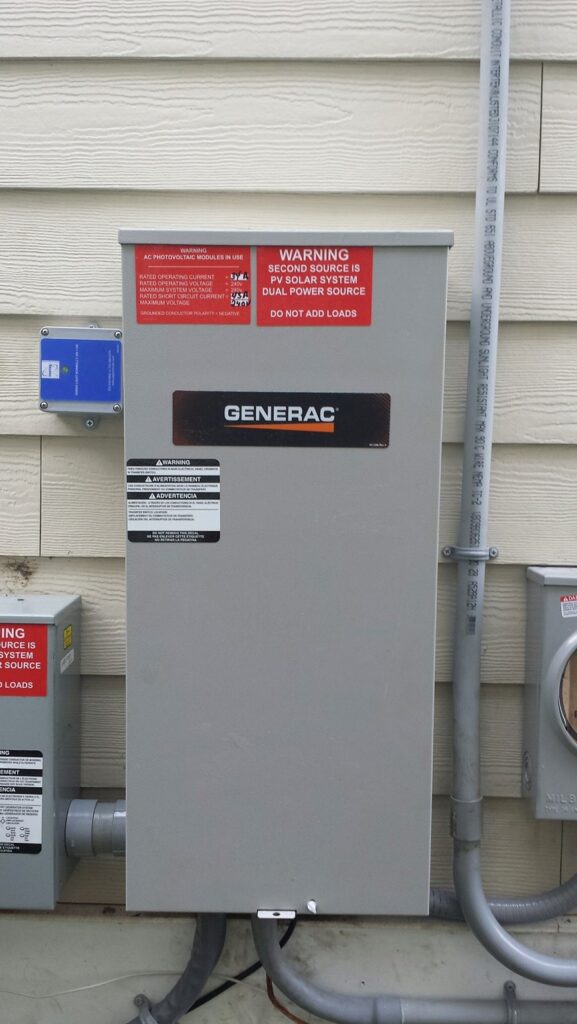
A 16 kW standby on natural gas
The house is about 2,500 square feet on a 200-amp service. Run through NEC Article 220 Part IV the connected load came to 16,320 watts, of which heating and cooling account for 4,000. Load management sheds that 4,000 while the generator is carrying the house, leaving 12,320 watts for the machine to meet against a 13 kW minimum on natural gas. A 16 kW Generac in a steel enclosure sits on a poured pad behind a 200-amp service-rated transfer switch mounted outdoors beside the meter, with surge protection on the panel. Whole-house rather than essential circuits, so nothing in the house has to be chosen over anything else during an outage. It ran on 19 August 2015 and was last serviced in September 2025.
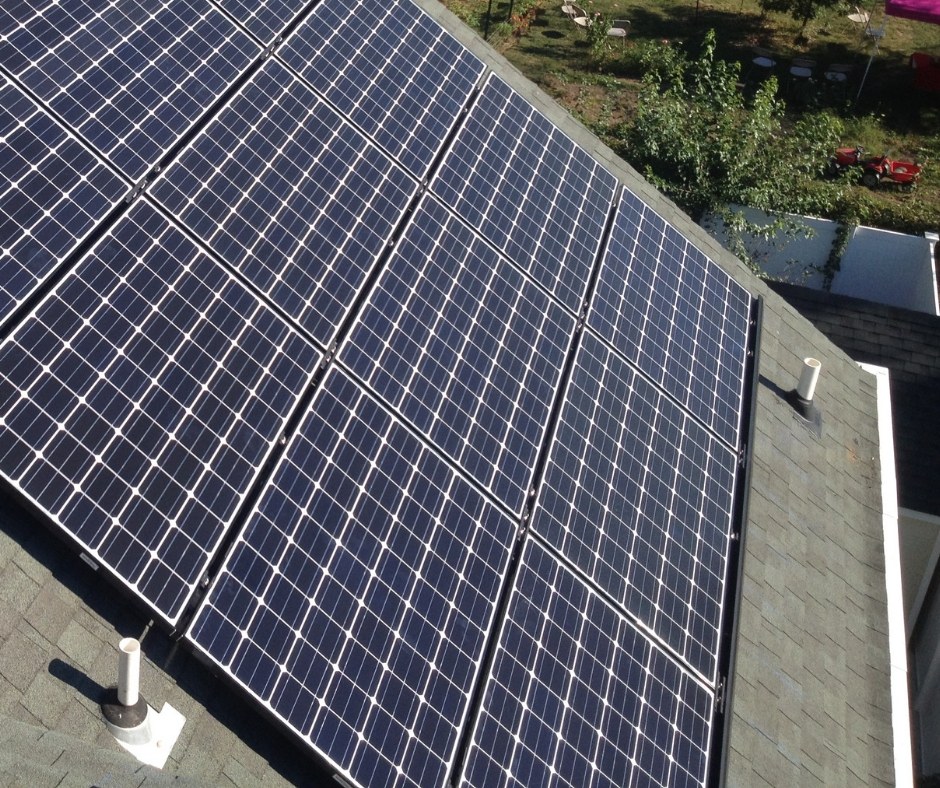
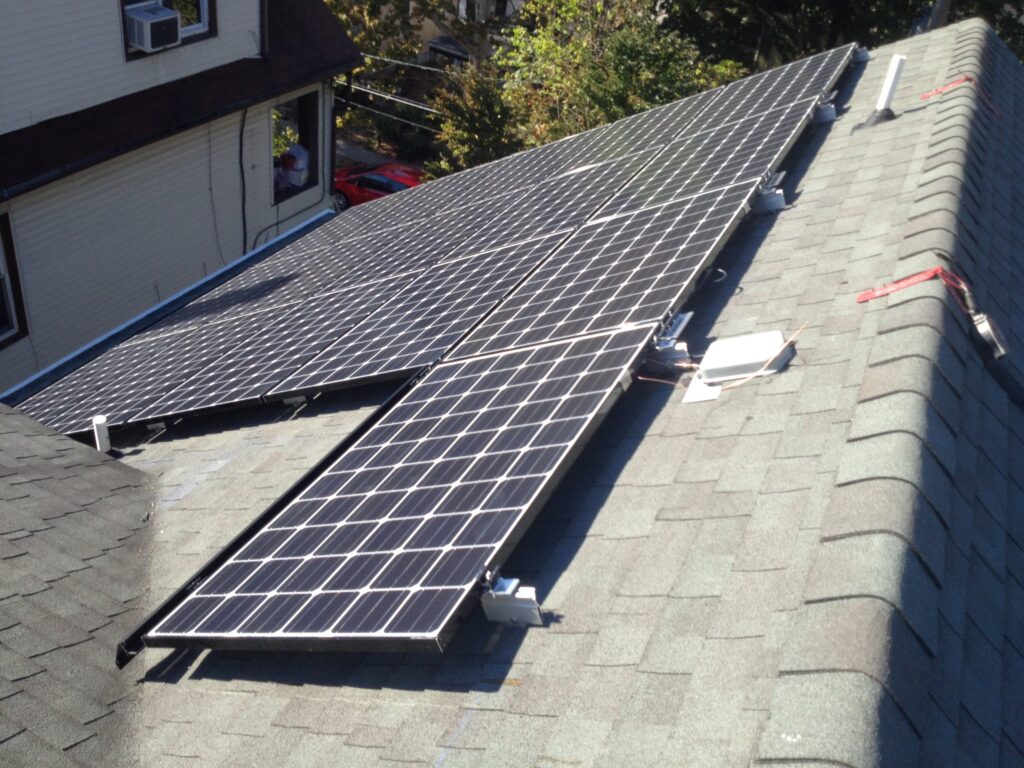
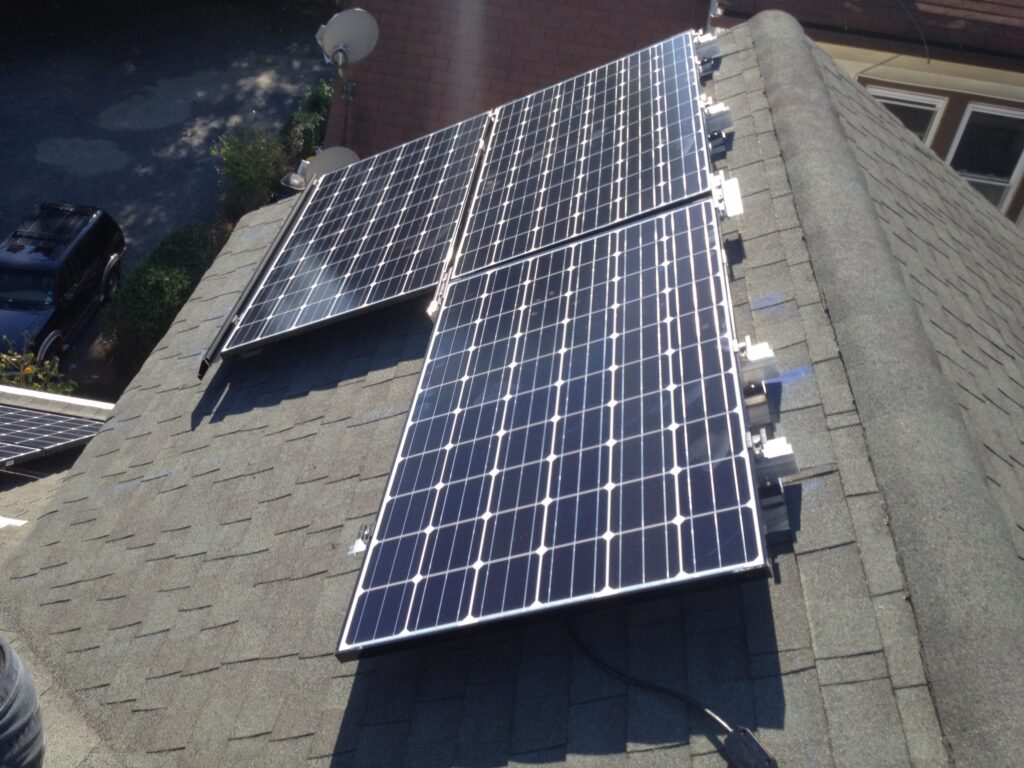
34 panels and 10.2 kW
Thirty-four LG 300 watt panels came to 10.2 kW on QuickMount flashed mounts, finished on 25 September 2015. Each panel has its own Enphase M250 microinverter rather than sharing a central inverter, so a panel in shade or a panel with a fault takes only itself out of the day’s production. PSE&G is the utility and the first year was designed for about 11,131 kWh.
Two systems, one house, five weeks apart
The generator and the array answer different questions and it is worth keeping them apart. The array works on ordinary days and changes what the house draws from PSE&G across the year. The generator does nothing on an ordinary day; it exists for the evening the grid goes down, and on that evening the solar is no help at all. This household bought the first one in the spring, watched it go in, and came back for the second before the year was out.
Project Facts
- Location
- Princeton, NJ
- Services
- Solar Panel Installation, Standby Generator Installation, Standby Generator Service
- Client since
- April 2015
Solar
- Panels
- LG Model # 300N1C-G3/35mm
- Panels
- 34
- System size
- 10.20 kW
- Inverter
- EnPhase M250-60-2LL-S22 Micro-Single
- Mounting system
- QuickMount
- Estimated first-year production
- 11,131 kWh
- Share of the home's electricity
- 63%
- Electric utility
- PSE&G
Standby generator
- Manufacturer
- Generac Model # 6462
- Rated output
- 16 kW LP / 16 kW NG
- Fuel
- Natural Gas
- Home sized for
- 2,500 sq ft
- Electrical service
- 200 amp
- Transfer switch
- 200 amp
- Load management
- Managed Whole House
Facebook: "They are completely professional and easy to work with. Both the generator and solar panels they installed are working great. It’s been more than two years now, and the financial returns on the solar are as projected."
Google: "Prompt, professional, courteous"
Green Sun Energy Services replied
Thank you for your kind words, Cliff. We appreciate your feedback and are glad to hear that you had a positive experience with our team at Green Sun Energy Services, LLC. We strive to provide prompt and professional service to all our customers.
Questions from Princeton homeowners
Standby generatorWhat happens if the manufacturer and Princeton disagree?
The installation has to satisfy all applicable requirements. A manufacturer's listing cannot be ignored, and a manufacturer's minimum clearance does not cancel a municipal zoning requirement. Where requirements conflict or the interpretation is uncertain, the Authority Having Jurisdiction is consulted before the work goes in rather than after.
SolarHow are the roof penetrations waterproofed?
Penetrations have to be flashed and sealed by a method appropriate to the roofing material and the mounting system -- the residential code's solar provisions require it specifically. It is the detail that decides whether an array is a twenty-five-year installation or a future leak.
SolarAre all mounting systems much the same?
No. They differ substantially in attachment method, waterproofing, rail design, materials, wind rating and installation requirements. Residential systems should use appropriately listed components installed to the manufacturer's instructions, and the residential code requires rooftop mounting and structural systems to satisfy the applicable structural and listing requirements.