

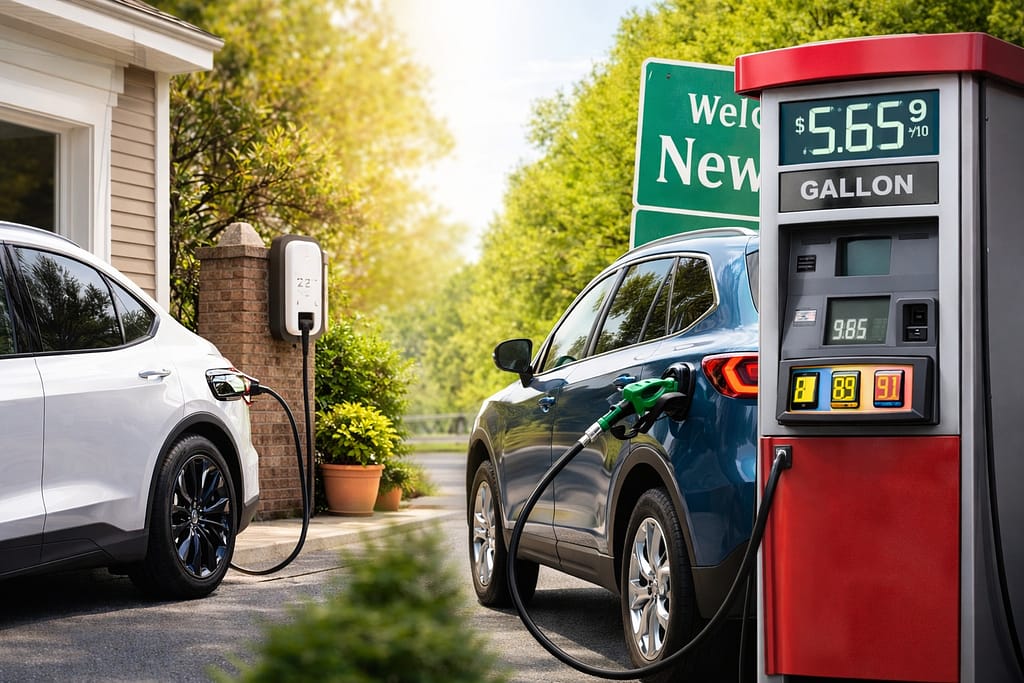
How New Jersey Drivers Can Estimate Real Fuel Savings
Executive Summary
Many New Jersey drivers are considering switching to an electric vehicle but want to understand the real-world cost difference between charging an EV and fueling a gasoline car. The EV Charging vs Gas Cost Calculator from Green Sun Energy Services allows homeowners to estimate weekly, monthly, and yearly driving costs using their local utility rates, current gasoline prices, and personal driving habits.
Using the calculator at
https://greensunnj.com/ev-charging/ev-charging-vs-gas-calculator/
drivers can compare EV charging costs to gasoline fuel expenses in minutes. The tool uses realistic vehicle efficiency data and typical New Jersey electricity rates to estimate total driving costs and potential savings.
While every situation is different, many studies show EV charging can cost significantly less per mile than gasoline—often cutting fuel costs by 40–60% depending on electricity rates and gas prices.
Understanding EV Charging vs Gasoline Costs
One of the biggest questions drivers ask when considering an electric vehicle is simple:
“Will it actually cost less to drive?”
The answer depends on several factors, including:
- Electricity rates in your utility territory
- Current gasoline prices
- The efficiency of the vehicle you drive
- Your monthly mileage
- Whether charging happens at home or at public stations
Because these variables change constantly, the best way to estimate your real costs is by using a calculator designed specifically for your region.
Green Sun Energy Services created the EV Charging vs Gas Cost Calculator for NJ Drivers to help homeowners evaluate these costs using realistic assumptions based on New Jersey utility territories.
Why Fuel Cost Per Mile Matters
Vehicle manufacturers advertise efficiency differently depending on the powertrain:
- Gas vehicles: miles per gallon (MPG)
- Electric vehicles: miles per kilowatt-hour (mi/kWh)
While those numbers are helpful, what drivers actually care about is cost per mile—how much it costs every time you drive a mile.
Typical estimates suggest:
- Home EV charging: about 4–6 cents per mile
- Gasoline vehicles: roughly 8–12 cents per mile depending on MPG and fuel prices
This difference is why many EV owners see noticeable reductions in their monthly transportation costs.
Electricity Costs in New Jersey
Electricity prices vary by state and utility territory. In New Jersey, the average residential electricity rate is roughly 22 cents per kilowatt-hour, though exact rates depend on the utility company and tariff structure.
For EV charging, this rate is important because it determines the cost of energy used to drive.
For example:
- An EV that drives 3.5 miles per kWh
- At $0.22/kWh electricity
Costs roughly:
$0.063 per mile
That means driving 1,000 miles per month could cost around $63 in electricity.
Gasoline Costs Continue to Fluctuate
Gasoline prices fluctuate frequently based on oil markets, seasonal demand, and global events. Recent reports show the national average gas price has climbed significantly due to geopolitical factors affecting oil supply.
For example:
- Gas at $3.50 per gallon
- Vehicle efficiency 30 MPG
Cost per mile:
$3.50 ÷ 30 = $0.117 per mile
At 1,000 miles per month, that equals roughly $117 in fuel costs.
Comparing that to the EV example above shows why many drivers see significant savings.
How to Use the EV Charging vs Gas Calculator
The calculator on the Green Sun Energy website simplifies this comparison by allowing users to input a few key variables.
Visit:
https://greensunnj.com/ev-charging/ev-charging-vs-gas-calculator/
Then enter the following information.
1. Select Your Electric Vehicle
Choose the EV you drive or are considering purchasing. The calculator includes a wide range of models from major manufacturers.
Each vehicle includes:
- Realistic efficiency estimates
- Comparable gasoline vehicle MPG data
This helps provide a fair comparison between similar vehicle types.
2. Select Your Electric Utility
Electricity rates differ across New Jersey utility territories, including:
- PSE&G
- JCP&L
- Atlantic City Electric (ACE)
- Rockland Electric (RECO)
Selecting your utility allows the calculator to estimate charging costs using realistic regional electricity prices.
3. Enter the Price of Gasoline
The calculator includes a default gasoline price but allows you to update it to reflect current pump prices.
Because fuel prices change frequently, adjusting this number can significantly change the cost comparison.
4. Enter Your Monthly Mileage
This field represents how much you drive each month.
Typical values are:
- 800–1,200 miles per month for many drivers
- 12,000 miles per year as the U.S. average
Entering your real driving habits helps produce the most accurate estimate.
What the Calculator Shows
After entering your information, the calculator generates several useful comparisons.
EV Charging Costs
- Weekly cost
- Monthly cost
- Yearly cost
Gasoline Costs
- Weekly fuel spending
- Monthly fuel spending
- Annual fuel spending
Estimated Savings
The calculator highlights the difference between the two scenarios so you can see potential fuel savings over time.
Example: Typical EV vs Gas Comparison
Here is a simplified example.
Assume:
- 1,000 miles driven per month
- EV efficiency: 3.5 mi/kWh
- Electricity: $0.22/kWh
- Gas vehicle: 30 MPG
- Gas price: $3.50/gallon
EV charging
- Energy required: ~286 kWh
- Monthly cost: ~$63
Gasoline vehicle
- Fuel required: ~33 gallons
- Monthly cost: ~$116
Estimated monthly savings
≈ $53
Over a year, that equals roughly:
$636 in fuel savings
These numbers will vary depending on the vehicle and energy prices.
Why Most EV Charging Happens at Home
Another important factor is where drivers charge.
Studies suggest about 80% of EV charging happens at home, with only about 20% occurring at public charging stations.
Home charging is typically cheaper because electricity from residential utility rates costs less than public fast-charging networks.
Installing a home Level 2 charger allows drivers to:
- Charge overnight
- Take advantage of off-peak electricity rates
- Reduce dependence on public charging
Benefits of Installing a Home EV Charger
Using a home charger provides several advantages beyond fuel savings.
Convenience
Drivers can plug in overnight and start each day with a full battery.
Lower Charging Costs
Residential electricity rates are usually cheaper than public charging.
Faster Charging
Level 2 chargers can add 20–30 miles of range per hour depending on the vehicle.
Increased Home Value
As EV adoption grows, homes with EV charging capability may become more attractive to buyers.
Why Local Calculators Matter
National estimates are useful, but local utility rates and fuel prices matter most when estimating EV operating costs.
That’s why the Green Sun Energy Services calculator focuses specifically on:
- New Jersey utilities
- Realistic vehicle efficiency
- Adjustable gasoline prices
- Personalized mileage inputs
This approach helps homeowners get a much more accurate estimate than generic national calculators.
Try the EV Charging vs Gas Calculator
If you’re considering an electric vehicle or installing a home charger, the best way to understand the potential savings is to run the numbers yourself.
Use the calculator here:
In just a few seconds, you can see how EV charging compares to gasoline costs based on your driving habits and local energy prices.