

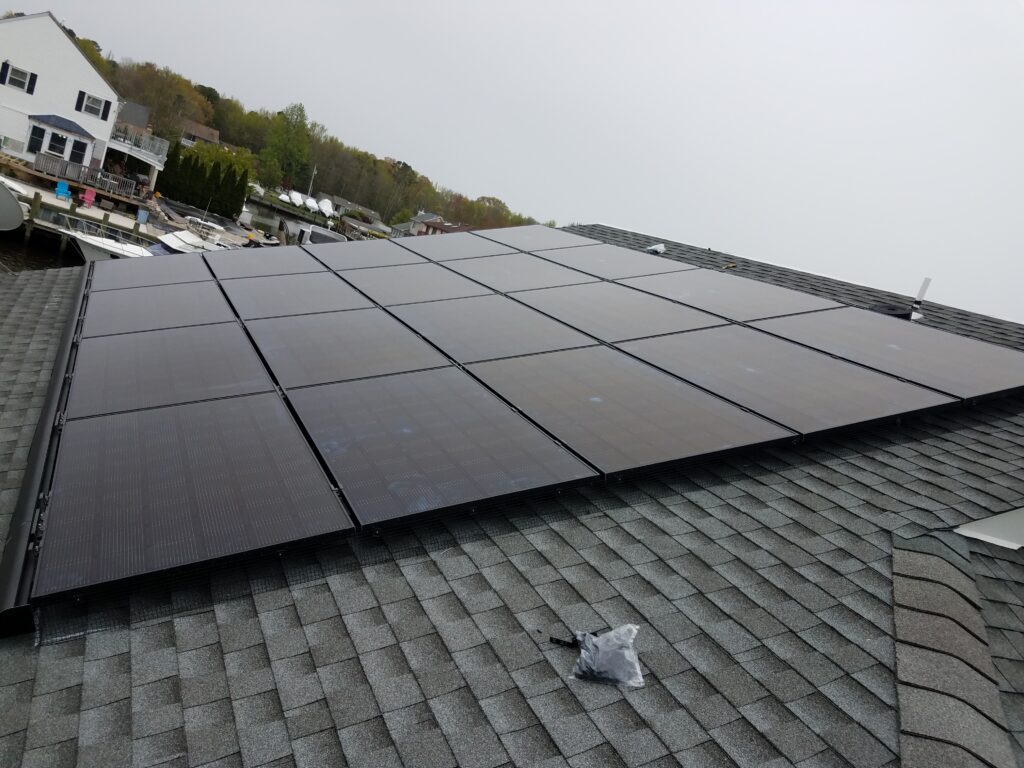
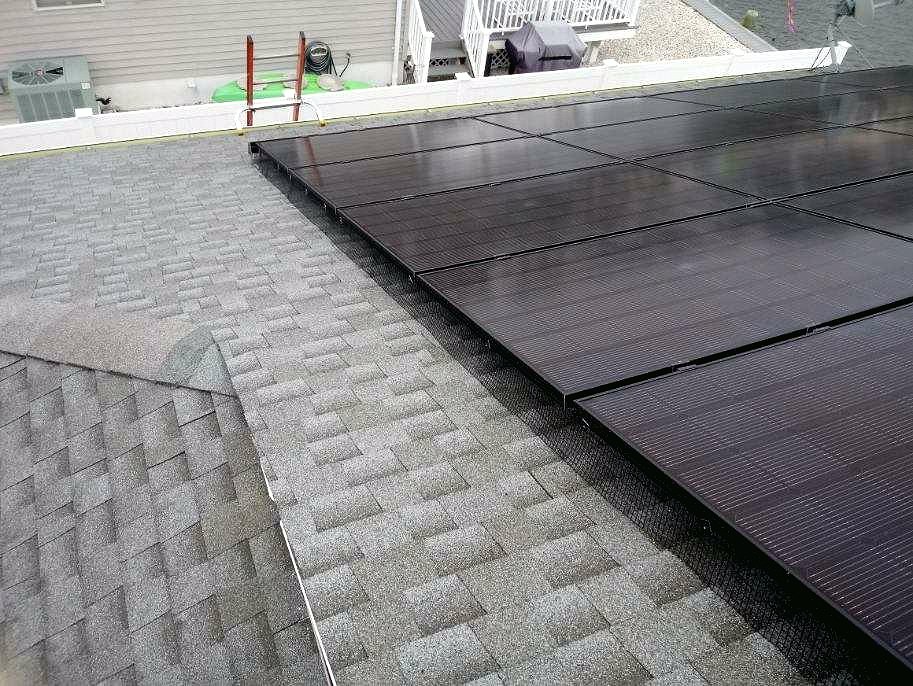
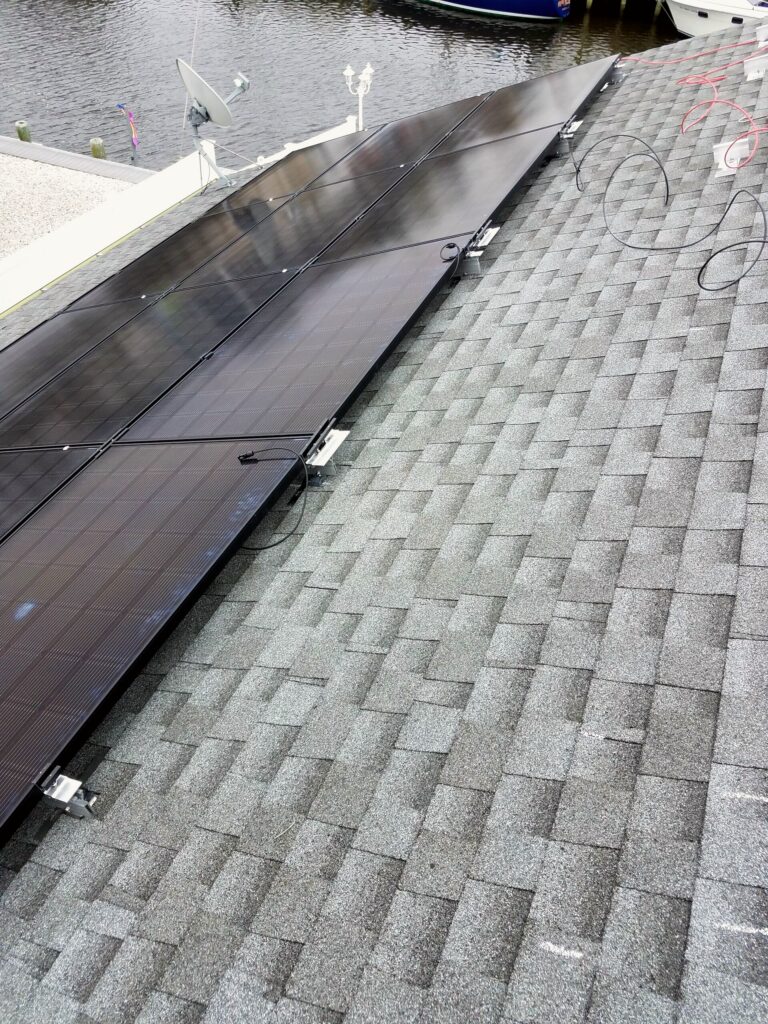
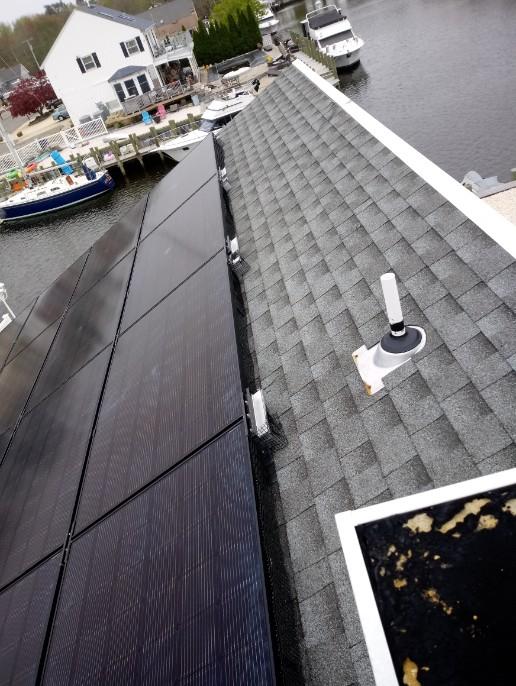
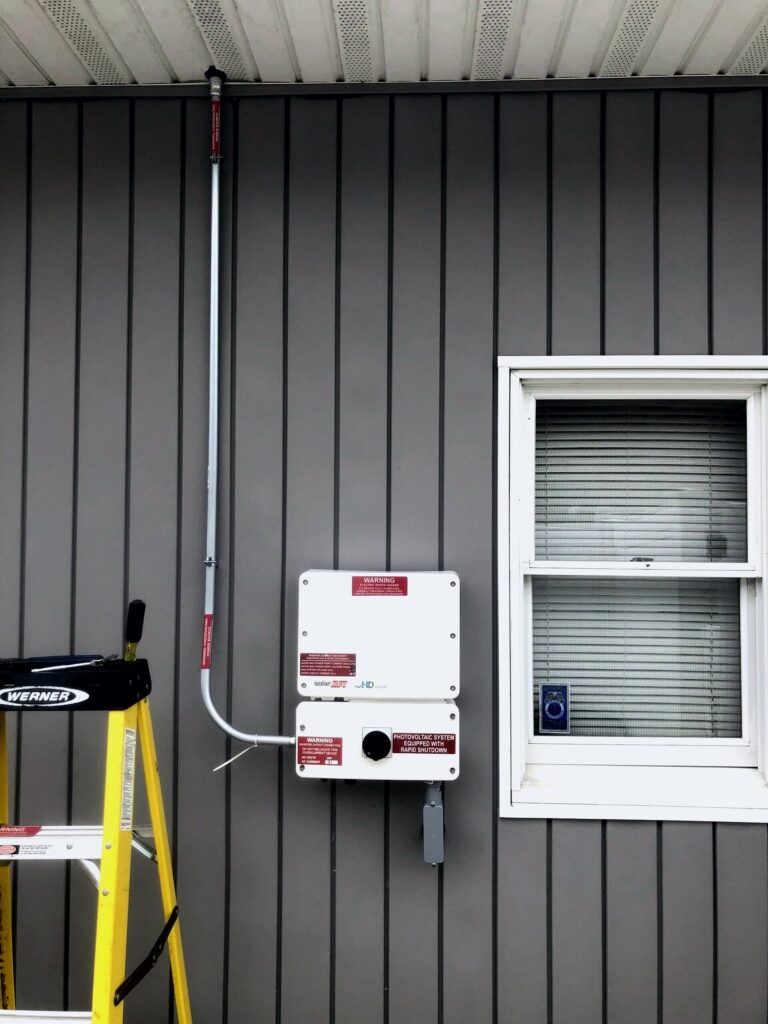
20-panel 6.4 kW solar array in Lanoka Harbor, NJ by Green Sun Energy Services.
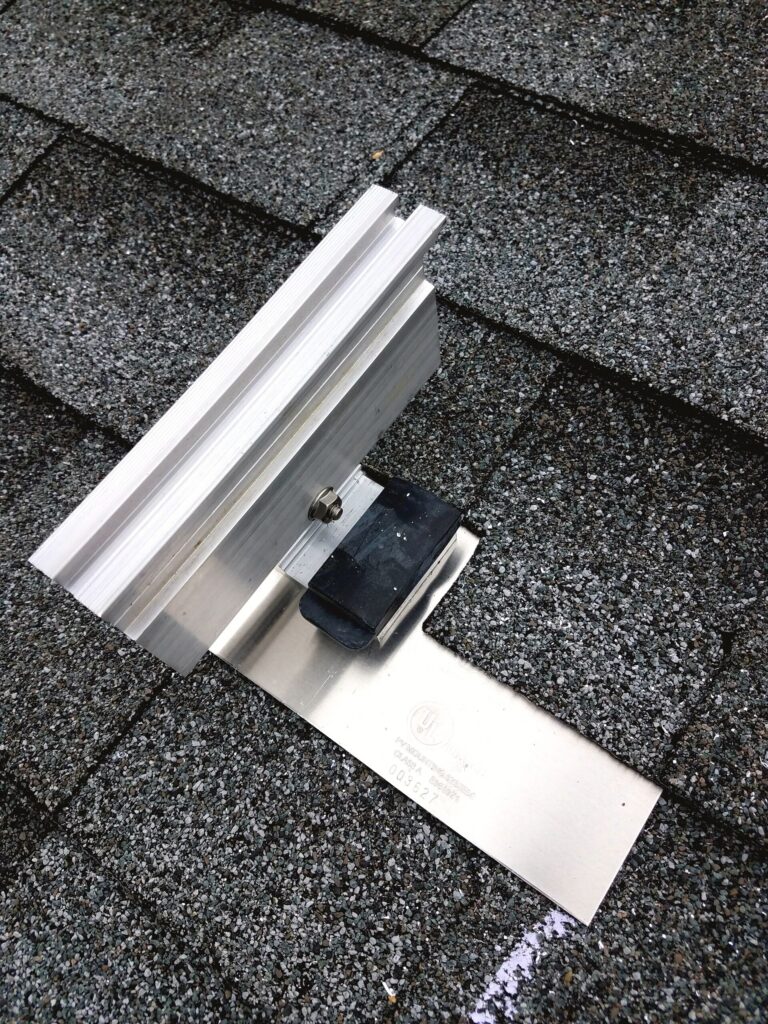
Catherine and Tim from Lanoka Harbor, NJ have been Green Sun Energy Services clients since April of 2019. The array is 6.4 kW – 20 LG 320-watt panels on a QuickMount mounting system – and it was finished in May of 2019. First-year production was estimated at 7,501 kWh. The job took in 88 feet of critter guard around the perimeter, which on a bayside street is worth doing at install: the gap under an array is warm, dry and sheltered, and the wiring is what gets chewed once something moves in.
Decision making, layout and installation went smoothly. Panels up and running ahead of
schedule. Glen, Karen and Chris all very accommodating.
Green Sun Energy Services replied
Catherine and Tim, thank you for taking the time to share this. It's good to hear that the process from planning through installation felt seamless and that your 20-panel array was up and running ahead of schedule. Glen, Karen, and Chris will be glad to know the effort was appreciated.
Why Catherine and Tim chose Green Sun Energy Services
More than solar panels: a professionally managed energy system, from design and permitting through installation, inspection, activation and ongoing support.
Why they chose us
Catherine and Tim chose Green Sun Energy Services to handle their solar panel installation in Lanoka Harbor, and the process covered everything from layout through to getting their 20 LG 320N1K-A5 panels up and running on a 6.4 kW system. The work included QuickMount solar mounting, a SolarEdge HD Wave inverter, and solar critter guard protection, with the whole project managed smoothly enough that the panels were running ahead of schedule. Their JCP&L utility connection was fully offset, and the system is projected to produce 7,501 kWh. Catherine and Tim found the decision-making straightforward and the team "very accommodating," which reflected the kind of professionally managed experience — from design and installation through inspection and activation — that led them to trust Green Sun with the job.
What makes Green Sun Energy Services different
- Solar: design and installation supervised by a NABCEP-certified professional (#PVA-111016-016148), with SolarEdge optimizers on every panel so each one reports its own output. On this home: a 6.4 kW solar array of 20 LG 320N1K-A5 panels, a SolarEdge SE5000H-US000NNC2 HD Wave inverter, the QuickMount mounting system and 88 ft of critter guard.
- Warranty: backed by a 25-year solar workmanship warranty.
- Local: locally owned and operated in New Jersey since 2010, NJHIC licensed (#13VH06229000), with 48 completed solar projects across Ocean County and 361 solar projects throughout New Jersey.
Our work in Lanoka Harbor
Lanoka Harbor, a community in Lacey Township, is served by JCP&L.
Generate electricity on your roof and use it to help power your vehicle.
Thinking about solar for your Lanoka Harbor home? Tell us about your project here or call 732-410-7818.
Power it. Protect it. Maintain it.
Project Facts
- Location
- Lanoka Harbor, NJ
- Services
- Solar Critter Guard, Solar Panel Installation
- Client since
- April 2019
- Manufacturer & model
- LG 320N1K-A5
- Panels
- 20
- System size
- 6.40 kW
- Inverter
- SolarEdge SE5000H-US000NNC2 HD Wave
- Mounting system
- QuickMount
- Estimated first-year production
- 7,501 kWh
- Share of the home's electricity
- 100%
- Electric utility
- JCP&L
- Critter guard fitted
- 88 ft
- Workmanship warranty
- 25 years
Solar questions from Lanoka Harbor homeowners
Does solar work well in Lanoka Harbor?
Yes. New Jersey receives more than enough annual sunlight for residential photovoltaic systems to produce substantial electricity. Panels run on light rather than heat, so they keep producing through the winter. What varies from house to house is roof orientation, pitch, shading, system size, equipment and local weather.
Are panels designed for New Jersey snow loads?
Yes. Rooftop installations must account for the applicable structural and environmental loads, snow among them, and the code specifically requires the roof and the photovoltaic system to support the applicable gravity and snow loads.
What happens when the panels make more than the house is using?
The surplus flows out through the meter to the grid and creates a net-metering credit, which can offset electricity drawn from the grid at another point in the billing period or later in the annualised period.