

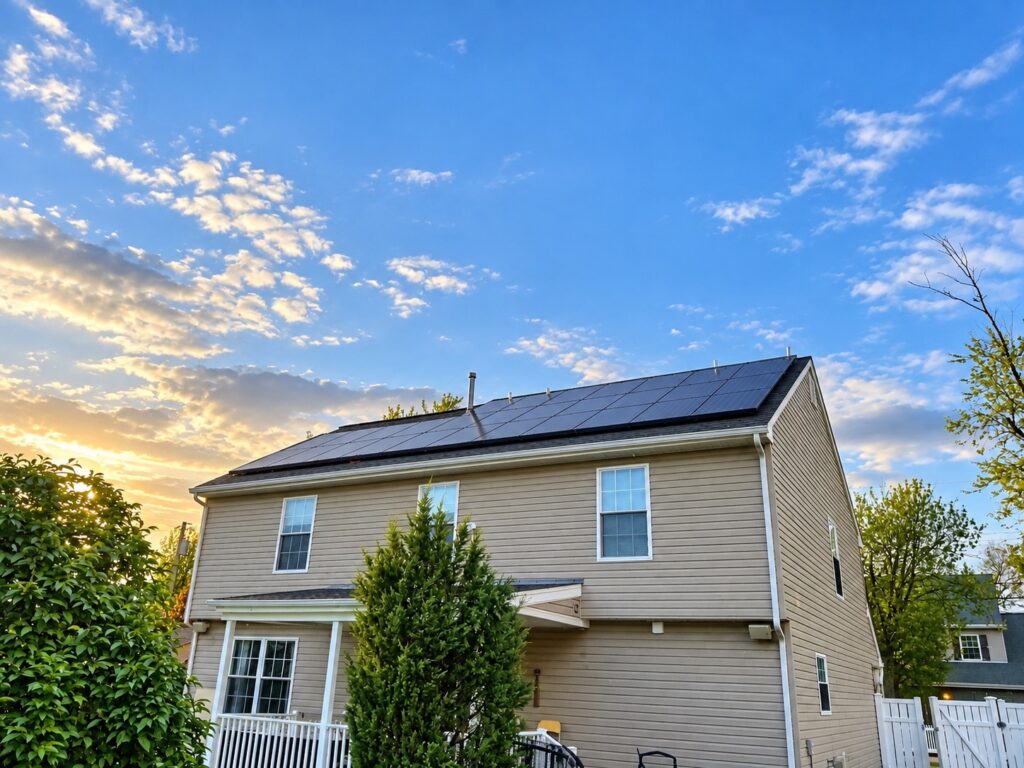
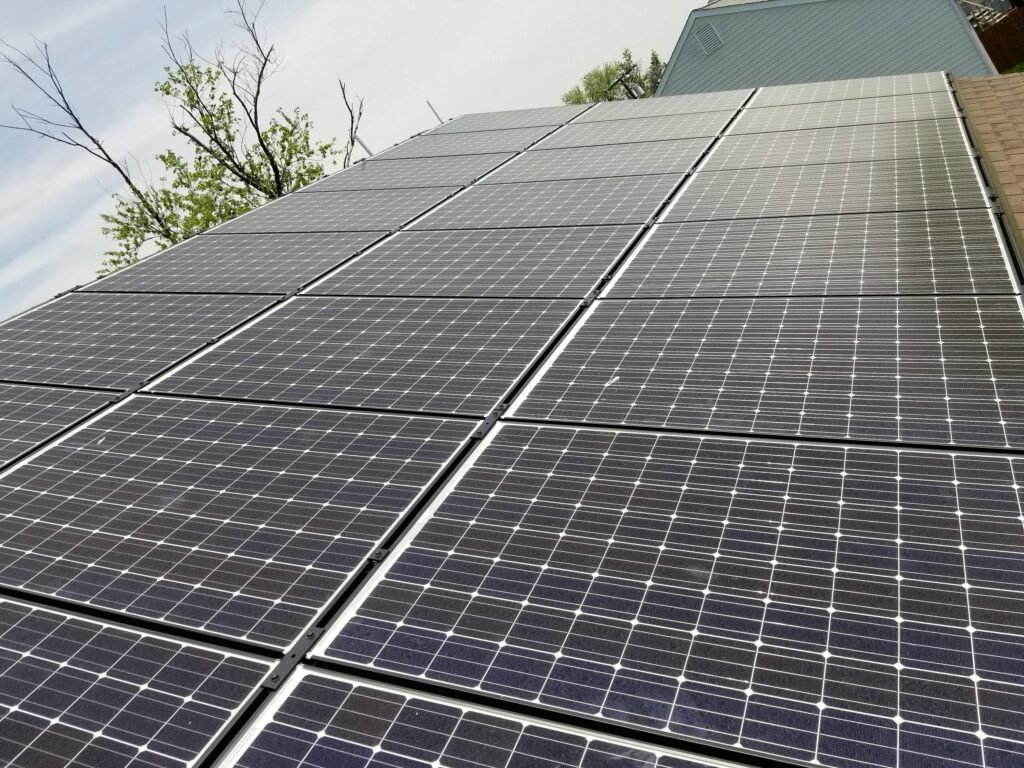
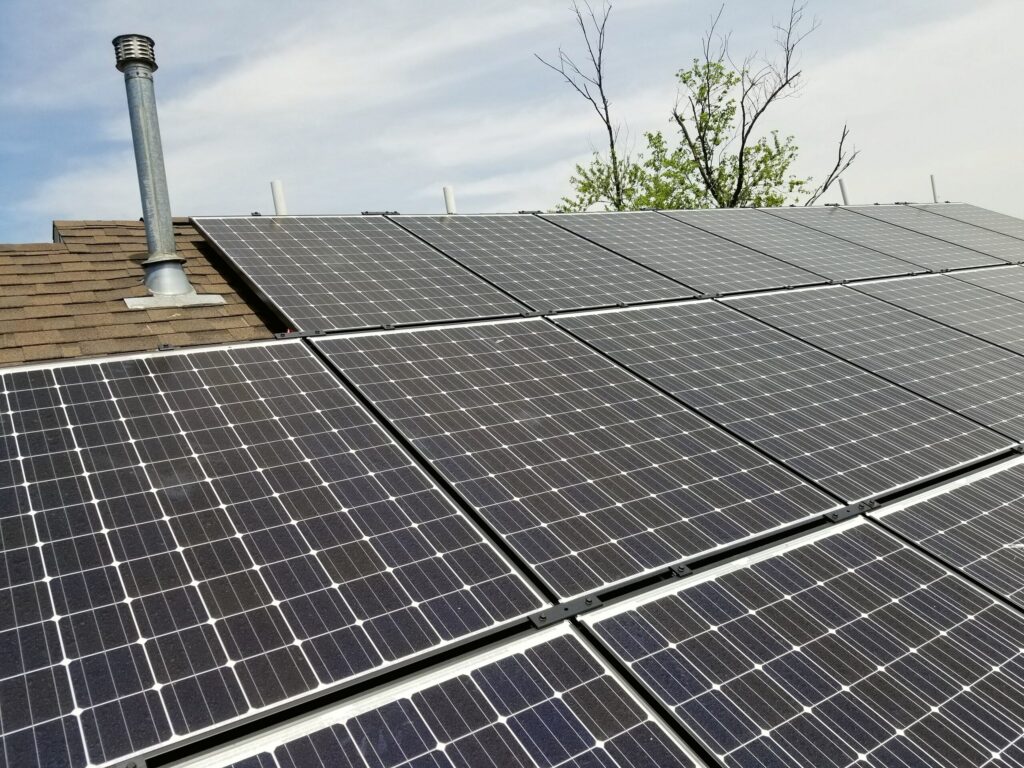
29-panel 9.57 kW solar array in Union Beach, NJ by Green Sun Energy Services.
John from Union Beach, NJ has been a Green Sun Energy Services client since March of 2018. Twenty-nine Panasonic 330-watt panels went on the roof that May – 9.57 kW in all, estimated at 13,013 kWh in the first year – on an Ecolibrium rail-free mounting system. Those are Panasonic HIT panels, the high-efficiency line, and the estimate reflects it: 13,013 kWh from 9.57 kW works out at roughly 1,360 kWh for every kilowatt installed. On a roof with a fixed amount of usable space, that ratio is the whole argument for attending to panel efficiency rather than only to the size of the array.
Green Sun was great to work with! They got the job done quickly and professionally! Would totally recommend them as solar company to use.
Why John chose Green Sun Energy Services
More than solar panels: a professionally managed energy system, from design and permitting through installation, inspection, activation and ongoing support.
What makes Green Sun Energy Services different
- Solar: design and installation supervised by a NABCEP-certified professional (#PVA-111016-016148), with SolarEdge optimizers on every panel so each one reports its own output. On this home: a 9.57 kW solar array of 29 Panasonic VBHN330SA16 panels, a SolarEdge SE7600H-US000NNC2 inverter and the Ecolibrium Solar mounting system.
- Warranty: backed by a 15-year solar workmanship warranty.
- Local: locally owned and operated in New Jersey since 2010, NJHIC licensed (#13VH06229000), with 139 completed solar projects across Monmouth County and 362 solar projects throughout New Jersey.
Our work in Union Beach
Green Sun Energy Services has completed 2 featured solar projects in Union Beach. Union Beach, a borough on Raritan Bay in Monmouth County, is served by JCP&L.
Generate electricity on your roof and use it to help power your vehicle.
Thinking about solar for your Union Beach home? Tell us about your project here or call 732-410-7818.
Power it. Protect it. Maintain it.
Project Facts
- Location
- Union Beach, NJ
- Service
- Solar Panel Installation
- Client since
- March 2018
- Manufacturer & model
- Panasonic VBHN330SA16
- Panels
- 29
- System size
- 9.57 kW
- Inverter
- SolarEdge SE7600H-US000NNC2
- Mounting system
- Ecolibrium Solar
- Estimated first-year production
- 13,013 kWh
- Share of the home's electricity
- 96%
- Electric utility
- JCP&L
- Workmanship warranty
- 15 years
Solar questions from Union Beach homeowners
Which utility handles interconnection in Union Beach?
The electric distribution company that serves the property. In New Jersey that is Jersey Central Power & Light, PSE&G, Atlantic City Electric or Rockland Electric depending on the address, and municipal electric systems can have their own requirements.
How does an optimizer system differ from microinverters?
An optimizer system puts DC power optimizers at the modules and a single central inverter elsewhere; a microinverter system puts a small inverter at each module. Both can provide module-level monitoring and rapid shutdown when properly designed -- they are different architectures rather than one being the upgrade of the other.
Can more solar be installed than the house uses?
New Jersey's net-metering rules generally limit a residential customer's generating capacity by reference to the electricity supplied to that customer over an annualised period. The programme is designed to offset a household's own consumption rather than turn it into a wholesale generator. Documented future loads can sometimes be relevant under the utility's procedures.