

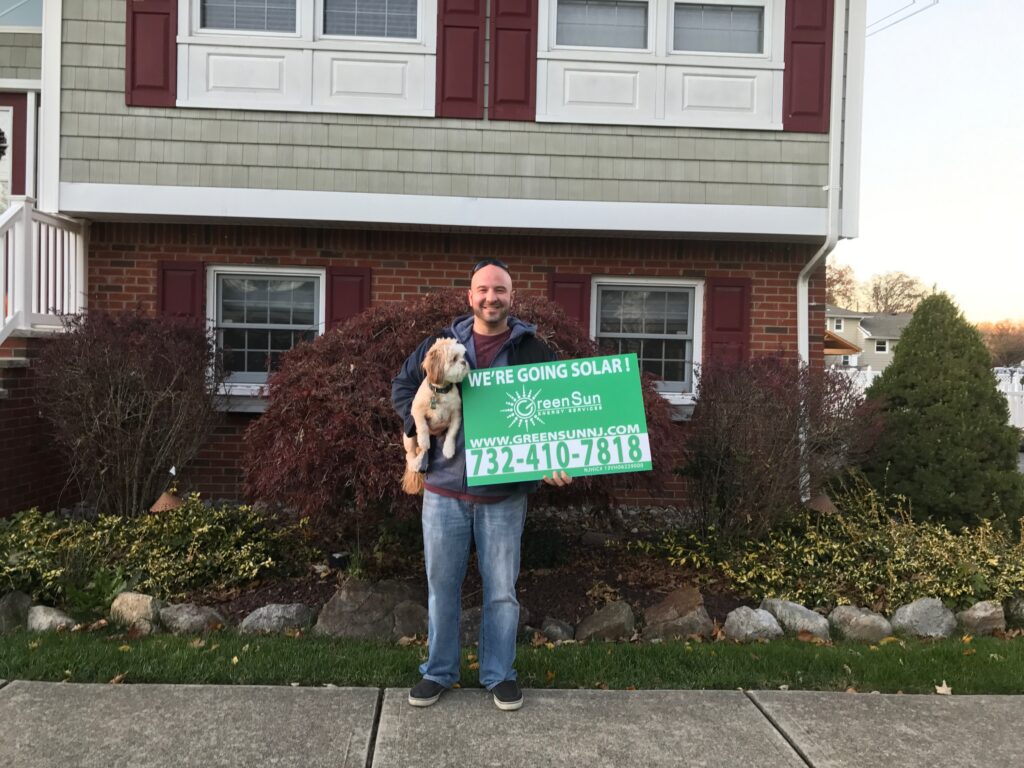
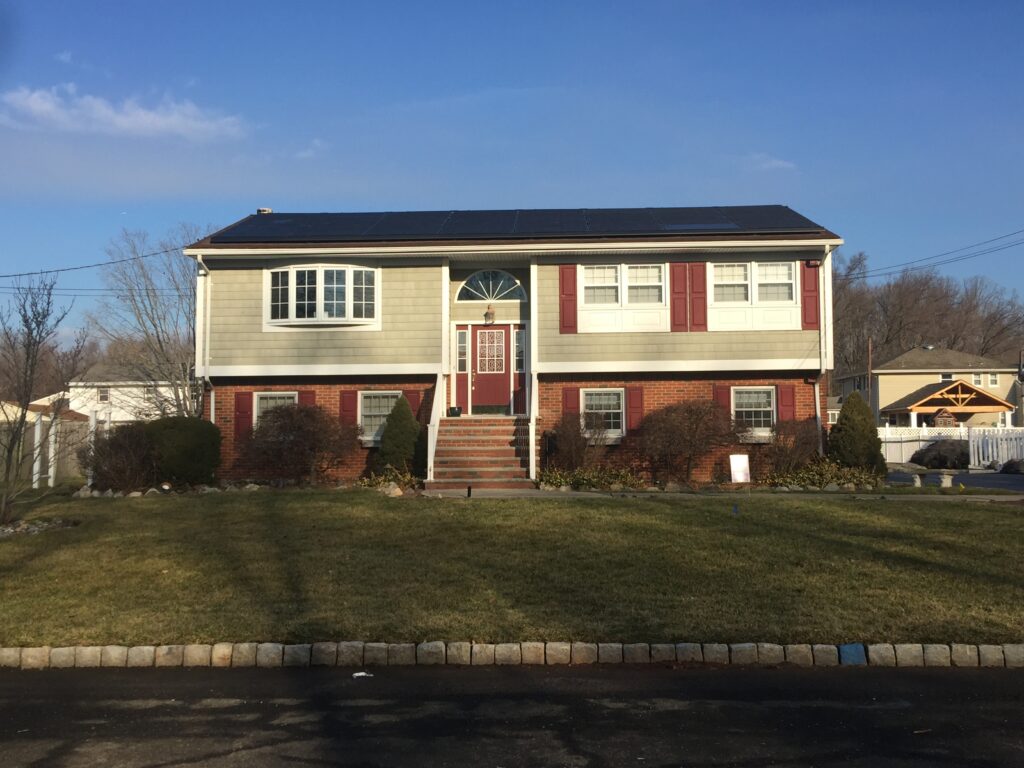
Solar Panel Installation in Fairfield, NJ by Green Sun Energy Services.
Lazaros & Stephanie from Fairfield, NJ have been Green Sun Energy Services clients since November of 2016. The array was completed in January of 2017: 32 panels making 9.6 kW into a SolarEdge inverter with P320 optimizers, both carrying 25-year warranties, and an estimated 12,070 kilowatt hours in the first year. PSEG interconnected the system that March. The existing roof was sound enough to build on, so the work stayed with the array. Nine years on, the optimizer layout is the part that has aged best: each panel still reports and converts on its own, which means a decade of leaf fall, shading and ordinary wear has never cost the system more than the panel actually affected.
Project Facts
- Location
- Fairfield, NJ
- Service
- Solar Panel Installation
- Client since
- November 2016
- Panels
- LG Model # 300N1K-G4/All Black
- Panels
- 32
- System size
- 9.60 kW
- Inverter
- SolarEdge SE7600A-US000NNR2 (25Y) W/ P320 Optimizers HD Wave
- Mounting system
- QuickMount
- Estimated first-year production
- 12,070 kWh
- Share of the home's electricity
- 92%
- Electric utility
- PSE&G
Green Sun Energy is everything we were looking for and more. Every interaction with Glen was timely, highly informative, professional, and friendly. It became apparent early on in the selection process that the complex decision to go green mattered in a way
Green Sun Energy Services replied
Thank you, Lazaros. Going solar is a complicated decision with a lot riding on it, and the job of the first conversation is to make it less complicated rather than more. The 32 panels making 9.6 kW at your home in Fairfield came out of exactly that process. Thank you for the trust and for the very generous words.
Solar questions from Fairfield homeowners
What should a Fairfield homeowner look for in a solar company?
One that can design, permit, interconnect, install, commission, monitor and service the system, and explain the structure accurately. That means twelve months of real usage, a realistic production model, correct kW and kWh arithmetic, orientation and shading, structural capacity, the rooftop code requirements, the electrical articles for photovoltaic systems and grid interconnection, rapid shutdown, manufacturer installation instructions, utility interconnection and net metering, incentive registration, roof age and condition, penetration and waterproofing detail, the panel, inverter, mounting and workmanship warranties, monitoring, and service after the installation. The question worth asking is not who quoted least, but which company has designed the best long-term system for the house and will still be able to support it years from now.
What happens to production in winter?
Panels keep producing, but shorter days normally mean lower monthly output than spring and summer. Cold modules actually operate efficiently; what reduces winter production is day length, sun angle, cloud, snow cover and shading. A properly designed system models production across the whole year rather than a good month.
Who receives the certificates on a leased system?
That depends on the lease or power purchase agreement. Where solar is third-party owned, the system owner commonly retains the renewable-energy certificates and related incentives because it owns the generating equipment. The contract should say explicitly who owns the environmental attributes.