

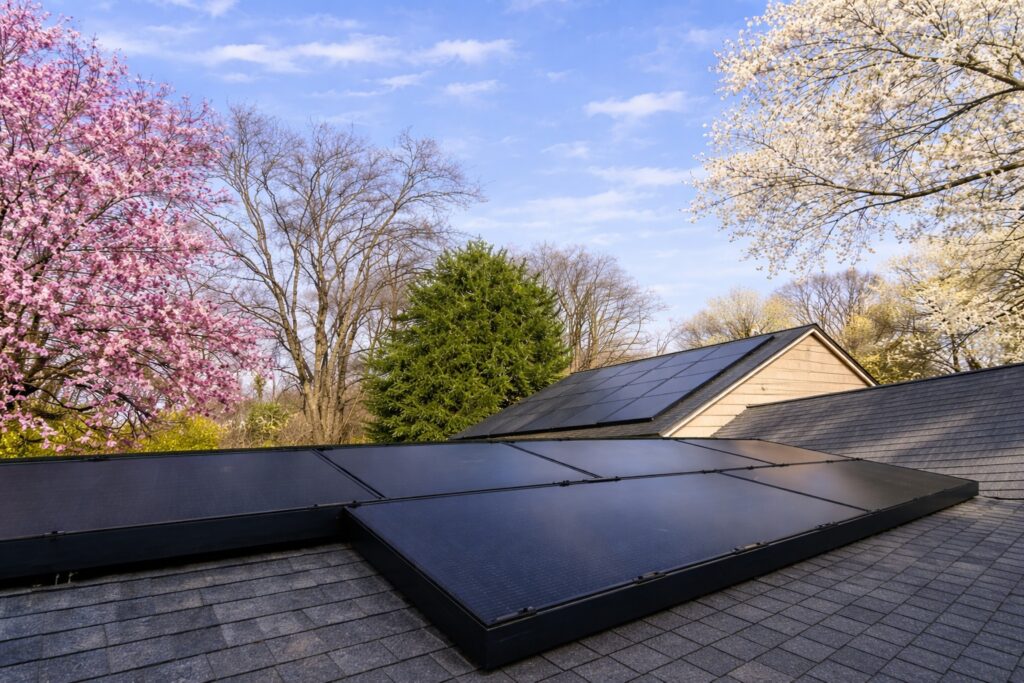
Paul from Westfield, NJ has been a Green Sun Energy Services client since 2022, and booked the roof and the array together. The roof came first, finished on 8 February: a single layer stripped to the sheathing and hauled away, then 2,900 square feet of new composition shingle in fox hollow with a 50-year warranty. The array followed a week later – 41 panels making 14.97 kW, and an estimated 15,525 kilowatt hours in the first year. PSEG interconnected it in March. Doing the roof first is the only order that makes sense: a 50-year roof beneath a 25-year array means the panels should never have to come off and go back on partway through their life.
Project Facts
- Location
- Westfield, NJ
- Services
- Roofing Installation, Solar Critter Guard, Solar Panel Installation
- Client since
- 2022
Solar
- Panels
- REC Model # REC-365NP2-Black
- System size
- 14.97 kW
- Inverter
- SolarEdge SE11400H-US000NNC2 HD Wave
- Mounting system
- Snap-N-Rack
- Estimated first-year production
- 15,525 kWh
- Critter guard fitted
- 232 ft
Roof
- System
- GAF Timberline Lifetime Roofing System
- Area replaced
- 2,900 sq ft
- Warranty
- 50 years
Questions from Westfield homeowners
How does residential solar work on a Westfield home?
The panels convert sunlight into direct-current electricity, and an inverter or microinverters convert that into alternating current the house can use. When the array produces more than the house is drawing, the surplus flows out through the utility meter under New Jersey's net-metering rules. When the house needs more than the array is making, the difference comes from the utility.
Does a manufacturer's roof warranty cover the contractor's workmanship?
It depends entirely on which warranty. Base product warranties commonly do not include workmanship at all, while enhanced warranties available through certified contractors can provide specified workmanship protection when qualifying products are used. Identify the warranty by its actual name rather than accepting the word warranty on its own.
How does an optimiser system differ from microinverters?
An optimiser system puts DC power optimisers at the modules and a single central inverter elsewhere; a microinverter system puts a small inverter at each module. Both can provide module-level monitoring and rapid shutdown when properly designed -- they are different architectures rather than one being the upgrade of the other.