

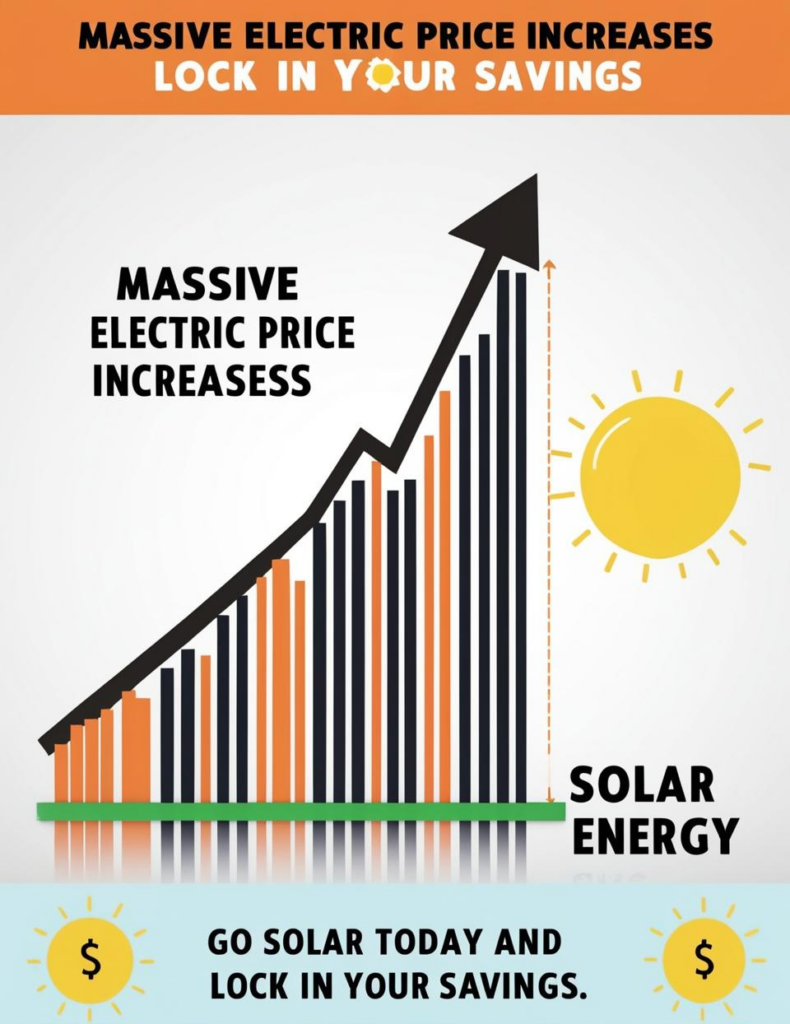
If you’ve ever looked into leasing solar panels for your New Jersey home, you’ve probably heard about something called an “escalator.” It sounds harmless enough—but it can make a huge difference in your long-term savings and your ability to sell your home down the line.
Let’s unpack what escalators mean, how they work, and why a 0% escalator might be the smartest move you can make.
What Is a Solar Lease Escalator?
When you lease solar panels, you agree to pay a set monthly amount to use the system. Many leases include an annual “escalator,” which increases your payment every year—typically by 0.9%, 1.9%, or 2.9%.
Escalators were originally designed to mirror utility rate inflation. The idea is that as electric rates rise, your solar payments will too—but at a slower pace. The reality, though, is that utility rates don’t always rise as fast as your escalator. If your payments climb faster than electricity costs, your savings shrink.
Why a 0% Escalator Is the Clear Winner
A 0% escalator means your monthly solar payment stays exactly the same for the entire term—whether that’s 20 or 25 years. No surprises, no creeping costs.
Here’s why that matters:
1. Predictable Payments for Life
With a 0% escalator, your payment never changes. That’s peace of mind in a world where New Jersey electric rates can spike unpredictably (some utilities raised rates nearly 20% in 2025!). You’ll always know what your bill will be—forever.
2. Better Long-Term Savings
A flat payment locks in your savings as utility prices increase. Each year, your fixed payment buys more value compared to your neighbor’s ever-rising utility bill.
3. No Hidden “Gotchas”
A 3% escalator may sound small, but over 25 years, it compounds dramatically. Even a 1.9% increase each year can eat away thousands in savings by the end of your lease.
Comparing Escalators: How Much They Really Cost Over Time
Let’s look at an example assuming:
- Current electric bill: $150/month
- Solar lease options start lower if you accept an escalator
- Utility costs rise about 3% per year (a NJ average)
| Year | Utility Bill (3%) | 0% Escalator | 0.9% Escalator | 1.9% Escalator | 2.9% Escalator |
|---|---|---|---|---|---|
| Start | $150 | $140 | $130 | $120 | $110 |
| Year 5 | $174 | $140 | $135.9 | $131.2 | $127.2 |
| Year 10 | $201 | $140 | $141.4 | $144.3 | $146.7 |
| Year 15 | $234 | $140 | $147.0 | $158.6 | $169.5 |
| Year 20 | $271 | $140 | $152.7 | $174.2 | $195.7 |
| Year 25 | $314 | $140 | $158.7 | $191.5 | $226.0 |
Takeaway:
- The flat 0% plan wins big in the long run.
- The 0.9% escalator is relatively mild and can still be acceptable.
- The 1.9% and 2.9% escalators start low but catch up fast—and eventually surpass what you might pay a utility for power.
When a Small Escalator Might Still Make Sense
There are a few situations where a small escalator (like 0.9%) could be reasonable:
-
Short-term plans: If you know you’ll sell your home in the next few years, the early lower payments might save you a bit upfront.
-
Tight monthly budget: A slightly lower starting rate can help if cash flow is your top priority today.
-
Utility rate uncertainty: If utility rates skyrocket well above 3%, a modest escalator won’t hurt much—but betting on that is risky.
For most homeowners, though, flat beats fancy.
Selling Your Home? Here’s How Escalators Can Affect It
One often-overlooked factor: solar leases must transfer when you sell your home.
The buyer either assumes your lease payments or you buy out the system.
And here’s where escalators can cause real headaches.
1. Buyers Don’t Like Rising Payments
If your lease payment climbs every year—especially at 2.9%—buyers see it as a growing liability. They may ask you to lower your home’s price or cover part of the buyout.
2. Credit Checks Can Delay Sales
The solar company will typically require the new homeowner to pass a credit check to assume the lease. Higher escalating payments make that riskier for lenders and buyers alike.
3. Financing Complications
Mortgage underwriters may treat a lease as debt—particularly if it escalates over time—affecting the buyer’s debt-to-income ratio and delaying approval.
4. Resale Value Perception
A home with a flat solar payment is much easier to sell. Buyers appreciate predictable costs and don’t have to worry about rising bills tied to someone else’s contract.
Smart Tips for Homeowners with Leased Solar
-
Know your lease terms. Read your contract carefully—especially the transfer clause and escalation schedule.
-
Start the transfer early. Notify your solar provider as soon as you list your home; the process can take weeks.
-
Show the savings. Keep records of your electric bills before and after solar. Buyers love proof of real savings.
-
Avoid high escalators. If you’re signing a new lease, think ahead—your future buyer will thank you.
Final Thoughts
For most New Jersey homeowners, a 0% solar lease escalator offers the best of both worlds: long-term savings, budget stability, and easier home resale.
A low escalator (like 0.9%) can be acceptable if it helps you qualify for solar or reduces upfront costs—but anything close to 2.9% is a red flag.
In short, the sun’s power shouldn’t come with fine print that grows more expensive each year.
When you lock in a flat rate for clean energy, you’re not just protecting your wallet—you’re investing in peace of mind.
A concise guide with practical steps — very helpful indeed.
A concise guide with practical steps — very helpful indeed.
Helpful and well-paced. Looking forward to your next post.